
<strong>Meteor Camera UK008V at Bannau Brycheiniog Visitor Centre</strong>
The Visitor Centre hosts a meteor camera (UK008V) which monitors the sky to the south-east between dusk and dawn each night for meteors. This camera is part of a UK network of over 240 cameras which in turn are part of a Global Meteor Network comprising over 808 cameras.
The events detected by the cameras can be described in two ways:
<ol style=”list-style-type: lower-alpha;”>
<li>Faint meteors that are grain size particles which enter the Earth’s atmosphere, they are debris from comets which reside in the outer regions of the Solar System. When the Earth passes through these debris fields, we observe concentrations of this material as meteor showers e.g. Perseids (August), Geminids (December) and Lyrids (April).</li>
<li>Fireballs come from Asteroids (rocky objects) typically located between Mars and Jupiter. If large enough to survive the journey to the Earth’s surface they are called meteorites.</li>
</ol>
The reason we are interested is they inform us about the history of the Solar System and are used to study how the planets are formed, the origin of life and the risks to space assets (satellites, spacecraft and astronauts).
At present we cannot predict meteor showers accurately, the data acquired by these networks is used in models to predict with improved precision the timing and intensity of meteor showers.
Also, by recording meteorite producing fireballs with known orbits it is possible to identify meteorite source regions. By 2021 only approximately 50 meteorites had known orbits.
Data from the UK Network can be viewed on the <a href=”https://archive.ukmeteors.co.uk/”>UK Meteor Data Archive website</a>.
A “Daily Report” is published around 4 hours after dawn <a href=”https://archive.ukmeteors.co.uk/latest/dailyreports/dailyreport.html”>here</a>.
There is also the ability to follow the captures using the livestream button in realtime <a href=”https://archive.ukmeteors.co.uk/live/index.html”>here</a>.
Summary data for each UK camera is available on the <a href=”https://globalmeteornetwork.org/weblog/UK/index.html”>Global Meteor Network website</a>.
Further information on the <a href=”https://globalmeteornetwork.org/”>Global Meteor Network</a>.
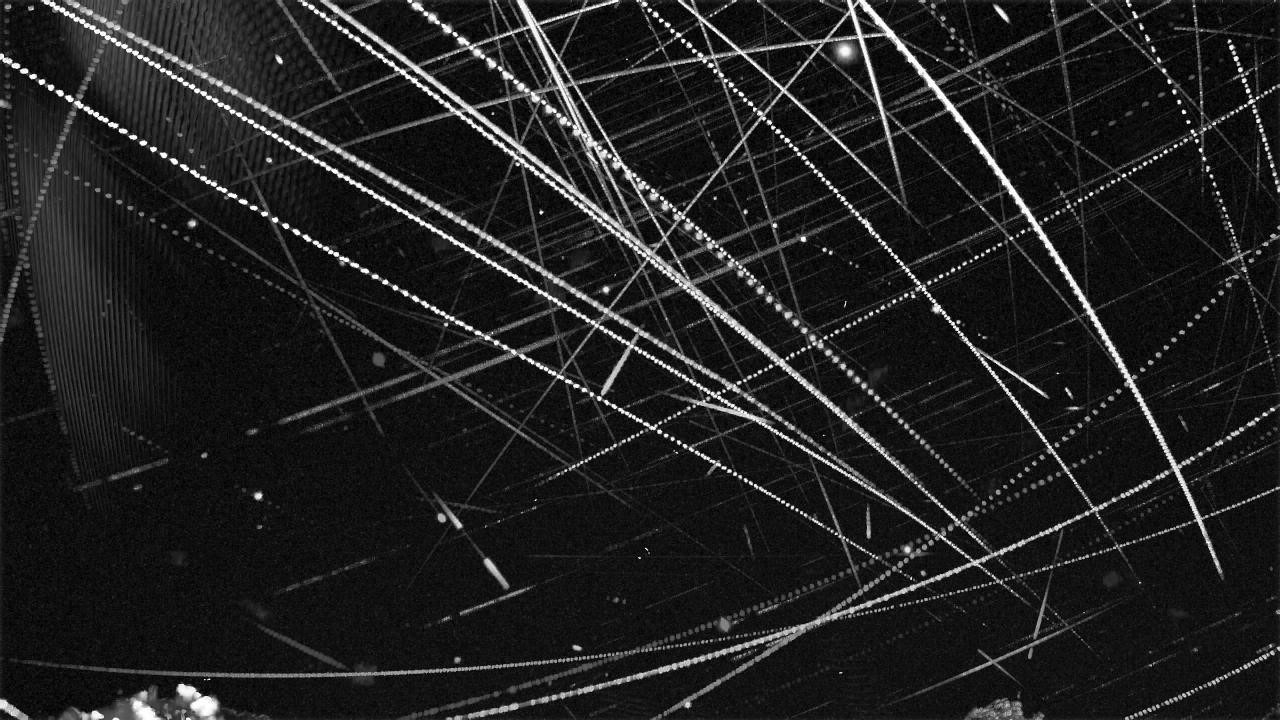
Showing satellites, airplanes and meteors
UK008V BannauNP
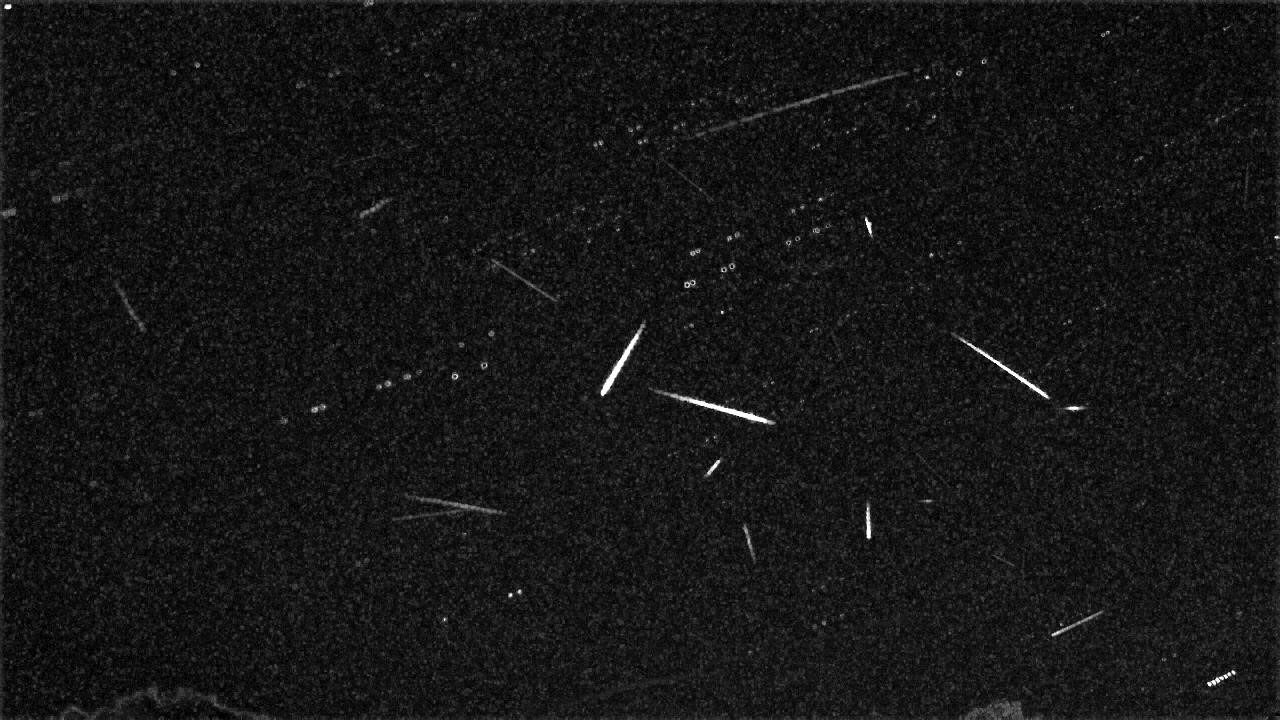
Showing meteor trails (short lines), star trails (dots)
UK008V BannauNP.